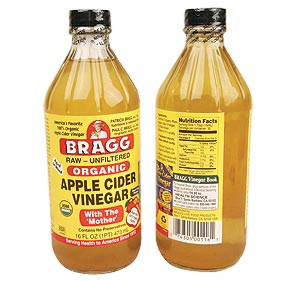
Clears Acne - Miraculously, Apple Cider Vinegar can clear acne. You can dilute it with water to drink it and it detoxifies your entire body to clear acne. Some people even suggest applying it directly to the acne but it can leave your skin dry.
Diet - If you are trying to slim down then Apple Cider Vinegar can be very helpful. It detoxifies the liver and helps you to shed a few extra pounds by reducing your appetite and helps you to burn calories.
Face Wash - Apple Cider Vinegar is an effective and cheap way to wash your face. It removes dull appearances by removing dry skin. It peels the outer layer away and helps to fade blemishes. It is ideal for oily and dry skin and leaves you skin glowing. Apple Cider Vinegar even cleans pores, removes blackheads and can be used as a toner.
Mani/Pedi - Apple Cider Vinegar can be used for your manicure and pedicure because it can be used to treat fungal infections. It leaves your feet and hands super soft and clean. Use equal parts of Apple Cider Vinegar and water.
Age Spots - If you mix 2 Tbsp of Apple Cider Vinegar with 1 Tbsp of orange juice and apply it to the age spot it can fade them, however drinking it may fade them faster.
Varicose Veins - The multi-vitamins in Apple Cider Vinegar can deter and reduce varicose veins.
Sunburn - Apple Cider Vinegar provides a much needed relief from painful sunburns. Apply it directly to the burn to soothe the skin and prevent itching, peeling and blistering.
Soft Skin - Mix 1 cup of Apple Cider Vinegar in a spray bottle with warm water and spray it on your body. Leave it on a few minutes and then rinse away, your skin will be silky soft.
Youthfulness - The high levels of beta carotene fight off free radicals, helping you to stay looking young longer.
Many people often love the tarty flavor of lemon juice in their dishes. But have you ever wondered that you can put this lemon juice to many more good uses than this? Yes! There are enormous benefits of lemon juice and water in your everyday life. You simply need to arm yourself with relevant knowledge and you would soon start valuing this amalgamation more than ever.
Lemon is an inexpensive, easily available citrus fruit, popular for its culinary and medicinal uses. It is used to prepare a variety of food recipes such as lemon cakes, lemon chicken and beverages like lemonade and lemon-flavored drinks. It is also used for garnishing. Lemon juice consists of about 5% citric acid that gives a tarty taste to lemon. Lemon is a rich source of vitamin C. It also contains vitamins like vitamin B, riboflavin and minerals like calcium, phosphorus, magnesium as well as proteins and carbohydrates. Lemon is generally consumed in the form of lemon juice or lemon water. Lemon water makes a healthy drink, especially when taken in the morning. Daily consumption of lemon water provides a number of health benefits like:
Good for stomach Lemon can help relieve many digestion problems when mixed with hot water. These include nausea, heartburn and parasites. Due to the digestive qualities of lemon juice, symptoms of indigestion such as heartburn, bloating and belching are relieved. By drinking lemon juice regularly, the bowels are aided in eliminating waste more efficiently. Lemon acts as a blood purifier and as a cleansing agent. The intake of lemon juice can cure constipation. It is even known to help relieve hiccups when consumed as a juice. Lemon juice acts as a liver tonic and helps you digest your food by helping your liver produce more bile. It decreases the amount of phlegm produced by your body. It is also thought to help dissolve gallstones.
Excellent for Skin Care Lemon, being a natural antiseptic medicine, can participate to cure problems related to skin. Lemon is a vitamin C rich citrus fruit that enhances your beauty, by rejuvenating skin from within and thus bringing a glow on your face. Daily consumption of lemon water can make a huge difference in the appearance of your skin. It acts as an anti-aging remedy and can remove wrinkles and blackheads. Lemon water if applied on the areas of burns can fade the scars. As lemon is a cooling agent, it reduces the burning sensation on the skin.
Aids in Dental Care Lemon water is used in dental care also. If fresh lemon juice is applied on the areas of toothache, it can assist in getting rid of the pain. The massages of lemon juice on gums can stop gum bleeding. It gives relief from bad smell and other problems related to gums.
Cures Throat Infections Lemon is an excellent fruit that aids in fighting problems related to throat infections, sore throat and tonsillitis as it has an antibacterial property. For sore throat, dilute one-half lemon juice with one-half water and gargle frequently.
Good for Weight Loss One of the major health benefits of drinking lemon water is that it paves way for losing weight faster, thus acting as a great weight loss remedy. If a person takes lemon juice mixed with lukewarm water and honey, it can reduce the body weight as well.
Controls High Blood Pressure Lemon water works wonders for people having heart problem, owing to its high potassium content. It controls high blood pressure, dizziness, nausea as well as provides relaxation to mind and body. It also reduces mental stress and depression.
Assist in curing Respiratory Disorders
Lemon water assists in curing respiratory problems, along with breathing problems and revives a person suffering from asthma.
Good for treating Rheumatism Lemon is also a diuretic and hence lemon water can treat rheumatism and arthritis. It helps to flush out bacteria and toxins out of the body.
Reduces Fever Lemon water can treat a person who is suffering from cold, flu or fever. It helps to break fever by increasing perspiration.
Acts as a blood purifier The diseases like cholera or malaria can be treated with lemon water as it can act as a blood purifier.
How much should I drink?
In case you are in good health and weigh 150 pounds or less, it is advisable for you to have juice of one-half of the lemon squeezed into one glass of water, twice daily. However, if you weigh more than 155 pounds, juice of one whole lemon in a glass of water should be preferred. For maximum benefit, this mixture should also be taken two times a day, though you may dilute more lemon juice according to your taste if you wish.
Do not just remain oblivious to the gifts of nature such as this, for you should always try to make the most of them. So, make it a part of your daily routine to drink a glass of warm lemon water in the morning and then open your gateway to enjoy its health benefits.
In the Kitchen
1. A box or small bowl of baking soda in the refrigerator, freezer, or any cupboard will keep away unpleasant odors.
2. Similarly, baking soda will keep away garbage odors; sprinkle the bottom of the pail, and then sprinkle again after you put a new bag in.
3. Grease fires can be put out by sprinkling them with baking soda.
4. To clean surfaces, sprinkle baking soda on a damp cloth. Wipe, then rinse with clean water.
5. To remove stale smells from food containers, rinse out with hot water and baking soda. If the smell persists, let the container soak overnight in the baking soda and water mixture.
6. To clean silver, use a paste of 3 parts baking soda to one part water. Rub the paste onto each item, then rinse with warm water and dry with a soft cloth.
7. To remove scuff marks or grease spills from the floor, sprinkle with baking soda and then wipe with a warm, damp cloth. This is even safe for no-wax floors!
8. For burnt-on food in the bottom of pots, sprinkle with baking soda, then add hot water. Let soak overnight; the dried on food will come loose much more easily.
9.To remove stubborn stains from most surfaces, use a baking soda paste (3 parts baking soda, one part water). Apply, let stand, then scrub or wipe clean. 10. Hairbrushes and combs can be cleaned in a baking soda solution.
11. To avoid clogged drains, pour 1/4 cup baking soda down weekly. Rinse through with hot water. All Around the House
12. To remove scents from a carpet, sprinkle with baking soda. Let stand for at least fifteen minutes, then vacuum. Repeat as needed.
13. If there is a smoker in the house, put baking soda in the bottom of each ashtray to keep away some of the stale smoke smell.
14. Baking soda in the litterbox will help prevent odors.
15. To quickly clean pets and remove "wet dog" odor, sprinkle with baking soda and brush out their fur.
16. To help remove spills, blot as much as possible. Then clean as you normally would. When finished, sprinkle with baking soda. Vacuum. This will decrease the chance that some of the spilled item will remain in the carpet and cause unpleasant odors later.
17. Children's toys can be cleaned using 1/4 cup baking soda in 1 quart warm water. Submerge in this mixture (or wipe with a cloth dampened in it), then rinse with clear water. In the Laundry
18. Replace half of each measure of laundry detergent with baking soda to keep clothing fresh.
19. To remove grease stains, either add baking soda to the wash load or pretreat the stains with a baking soda paste.
20. Pretreat diapers in their pail with baking soda. This will keep odors from becoming overpowering between washings.
21. Baking soda increases the effectiveness of chlorine bleach. Add 1 / 2 cup to your laundry, along with the usual amount of bleach.
22. If you keep a laundry hamper, add some baking soda every day to keep the hamper from smelling between emptyings. Outside the House (Yard and Garage)
23. Baking soda can be used to help clean up grease spills.
24. To remove burnt food from the grill, sprinkle with baking soda, then soak. After several hours, the charred pieces will come loose easily.
25. Lawn furniture can be easily cleaned with a rinse of 1/4 cup baking soda in 1 quart warm water.
26. The children's pool can be cleaned and have mildew removed by washing with baking soda in warm water.
27. Before packing away your camping gear after a trip, sprinkle with baking soda.
Health:
1. Drink plenty of water.
2. Eat breakfast like a king, lunch like a prince and dinner like a beggar.
3. Eat more foods that grow on trees and plants and eat less food is manufactured in plants.
4. Live with the 3 E's -- Energy, Enthusiasm and Empathy.
5. Make time to pray.
6. Play more games.
7. Read more books than you did in 2009.
8. Sit in silence for at least 10 minutes each day and just think.
9. Sleep for 7 hours.
10.Take a 10-30 minutes walk daily. And while you walk, smile.
Personality:
11.Don't compare your life to others. You have no idea what their journey is all about.
12.Don't have negative thoughts or things you cannot control. Instead invest your energy in the positive present
moment.
13.Don't over do. Keep your limits.
14.Don't take yourself so seriously. No one else does.
15.Don't waste your precious energy on gossip.
16.Dream more while you are awake.
17.Envy is a waste of time. You already have all you need..
18.Forget issues of the past. Don't remind your partner of his/her mistakes from the past. That will ruin your present happiness.
19.Life is too short to waste time hating anyone. Don't hate others.
20.Make peace with your past so it won't spoil the present.
21.No one is in charge of your happiness except you.
22.Realize that life is a school and you are here to learn. Problems are simply part of the curriculum that appear and fade away like algebra class, but the lessons you learn will last a lifetime.
23.Smile and laugh more.
24.You don't have to win every argument. Agree to disagree...
Society:
25.Call your family often.
26.Each day give something good to others, even if it is only a laugh.
27.Forgive everyone for everything..
28.Spend time with people over the age of 70 & under the age of 6.
29.Try to make at least three people smile each day.
30.What other people think of you is none of your business.
31.Your job won't take care of you when you are sick. Your friends will. Stay in touch.
Life:
32.Do the right thing!
33.Get rid of anything that isn't useful, beautiful or joyful.
34.GOD heals everything.
35.However good or bad a situation is, it will change..
36.No matter how you feel, get up, dress up and show up.
37.The best is yet to come..
38.When you awake alive in the morning, thank GOD for it.
39.Your inner most self is always happy. So, be happy.
The hardy yet humble lavender plant embodies healing properties that benefit the mind and body. Find out how this garden favorite can help relieve stress, aid insomnia, fight depression and more!
1. Lavender flowers (fresh or dried) emit a strong, aromatic, uplifting scent when crushed between the fingers. For a quick mood pick-me-up or instant stress relief, crush and roll between your fingers a few of the flower buds and inhale the scent slowly and deeply. The combination of breathing deeply and inhaling the lavender scent will calm nervous tension, anxiety and panicky feelings within minutes.
2. A relaxing, soothing tea can be made from the flowers. Just put one heaping tablespoon of the fresh or dried flowers in a tea pot, and pour boiling water into the pot. Infuse for about ten minutes. This tea calms the nerves, settles the stomach and “butterflies” and induces sleep.
3. Lavender essential oil can be applied like a perfume to the hair, neck, ears or other body parts. Smells delicious!
4. Add several drops of lavender oil to your bath for a soothing soak, or just add a generous handful of the fresh or dried flowers if you don’t have the essential oil.
5. To make sleep more restful, drip a few drops of lavender oil on your pillow. Another option is to wrap a handful of the dried flowers in a cheesecloth sachet, tie and throw in your pillowcase.
6. To soothe a sunburn, add a few drops of the essential oil to water in a spray bottle, and mist sunburned skin.
7. Wrap a handful of lavender flowers in a square of cheesecloth and tie with a string. You can also drip a few drops of essential oil onto the sachet for an extra aromatherapy boost. Throw the sachet in your dryer to make your clothes smell great. This will freshen up to 25 dryer loads!
8. Apply lavender essential oil to insect bites and stings, cuts, scrapes and abrasions. Lavender is very anti-septic and helps destroy germs that can cause infections.
9. Infuse fresh or dried lavender flowers as if to make a tea. But instead of drinking it, let it cool down and use as a hair rinse to reduce dandruff.
10. Pulverized lavender flowers can add a unique and delightful flavor to salads, custards, jams, jellies and cookies, especially sugar cookies. It is a culinary relative to mint, sage, marjoram and thyme and can be used in the same fashion as these herbs. Lavender is so versatile in the kitchen, that virtually any experimentation with it will yield favorable results.
It relieved a bee sting in minutes and reduced pain for more than five hours, according to one informal test -- better than eight other over-the-counter products and home remedies, including every sting cream and stick tried . Toothpaste's other "off-label" use? Zit zapping. Put a tiny dot on a pimple before bed. The pimple should be dried out and less noticeable by the next morning. But use only in emergencies. Toothpaste's fluoride can make acne worse, says Adam S. Stibich, MD, director of the Dermatology Clinic in Hot Springs, Arkansas.
Dish Detergent
If you've been exposed to poison ivy, liquid dish soap could spare you from the red, itchy rash. When researchers swabbed the forearms of medical students with crushed poison-ivy leaves, then rubbed a patch with everyday dish detergent for 25 seconds before rinsing, they found that dish soap prevented a reaction in almost half the volunteers and reduced the inflammation and blistering in the rest by 56 percent. The soap works because it strips your skin of the plant oil that's responsible for causing the rash. But for it to work you need to wash within two hours of exposure, before the oil has time to bind to your skin cells, says Dr. Stibich, a coauthor of the study. He adds that any full-strength dish detergent will do the trick.
Peppermint
A minty herb that's long been known to quiet the occasional stomach upset, peppermint is now also seen as a powerful treatment for irritable bowel syndrome -- frequent bouts of pain, gas, bloating, diarrhea, or constipation that strike as many as one in five adults. Peppermint-oil capsules bring significant relief to about one in three IBS sufferers, according to the American College of Gastroenterology. Surprisingly, prescription antispasmodic drugs help only one in six. The recommended dose is three 0.2-mL capsules a day and it's safe to try on your own. But don't use it if you have gastroesophageal reflux disease or a hiatal hernia, since it can make their symptoms worse.
Ginger
This gnarly root quells pregnancy-related morning sickness and vomiting, possibly because it blocks the serotonin receptors in the stomach that cause nausea, according to a review of six studies. It also reduces motion sickness, says Brett White, MD, an assistant professor of family medicine at Oregon Health Sciences University. He recommends steeping a slice of fresh ginger about the size of a pat of butter in a cup of boiling water for 10 minutes, then drinking it an hour before you travel. Dried ginger is effective, too. You'll find tea bags or capsules in most health-food stores.
Camphor-Eucalyptus Menthol Ointment
Vicks VapoRub and similar topical cold remedies may be more effective than a prescription pill against the fungus that makes toenails thick, yellow, and unsightly: Thirty-eight percent of people who applied the ointment daily to affected toes were fungus-free in five to 16 months, according to a study from the Michigan State University College of Nursing, in East Lansing, compared to 35 percent for the pill. Experts recommend applying the ointment twice a day until the fungal nail has grown out and been replaced by a healthy nail.
Baking Soda
You know you can cook with it or use it to deodorize the fridge, but it's also an effective antacid -- just follow the instructions on the box. What's more, three international studies have concluded that baking soda is one of the best treatments for bothersome earwax. "It takes some time, but it's a safe way to get rid of packed earwax that is interfering with hearing," says Walter C. Johnson, MD, a specialist in internal and emergency medicine at Dewitt Army Community Hospital, in Fort Belvoir, Virginia. Just mix 1/4 teaspoon baking soda with 2 teaspoons water. While lying on your side with one ear on a pillow, have someone drip the liquid into your upturned ear using a small spoon or an eyedropper. Wait one hour. Then flush out the dissolved earwax with warm water, using a bulb-shaped ear syringe. Caveat: Don't try this on children with tubes in their ears.
Baby Shampoo
Treat itchy, red, or crusty eyelids -- a problem for many contact-lens wearers -- by gently scrubbing the edges of your lids with a cotton ball soaked in diluted baby shampoo (three drops shampoo to six tablespoons of water). Then rinse the lids with a clean cotton ball dipped in warm water. Do this in the morning and at bedtime to help your eye feel better, says Dr. Rosen. If the eye problem doesn't clear up in a few days, see your physician. You may have developed an eye infection that requires a prescription for an antibiotic ointment.
Honey
Just a spoonful calms a cough better than over-the-counter cough syrup or no treatment at all, notes a Pennsylvania State University at Hershey study of more than 100 children ages 2 to 18. Honey soothes by coating the throat but may also help because it's packed with disease-fighting antioxidants and antimicrobials. Don't feed it to kids under age 1; their immature immune system can't battle a bacterium that's in some honeys. For adult-size coughs, a teaspoon or two is enough. If you're allergic to bee stings, make sure you don't have a honey allergy, too.
Witch Hazel
This clear astringent is an effective facial cleanser, treatment for insect bites, and cooling agent for inflamed hemorrhoids. Now research from Germany suggests witch hazel fights Herpes simplex virus type 1 -- the virus that causes cold sores. "Witch hazel's drying effect may break down the fatty outer envelope of virus cells, weakening them," Dr. Stibich explains. To apply witch hazel, dip a cotton swab into the bottle, then dab on your cold sore. Although the best dose hasn't been determined, it's safe to apply several times a day.
Olive oil is one of the most popular ingredients in cooking, but if you’ve never used it for beauty, you’re in for a treat. Believe it or not, Rachel Ray’s pet ingredient is not only a necessity in any pasta dish, but also great for your nails, lips, hair, and skin. Why? Olive oil is rich in squalane, a natural emollient that penetrates skin without leaving a greasy film behind. Beyond that, it’s packed with Vitamins A & E and a number of polyphenols that already make it a popular inclusion in beauty products. Check out the below list for 15 inventive ways to get gorgeous Italian-style:
1. A little EVOO makes a fabulous substitute for foot cream. Just rub some on your feet before you go to bed, put on some socks and wake up with super soft tootsies.
2. Bad sunburn? Mix olive oil with white vinegar and apply before a warm bath to soothe and heal the burn.
3. Banish frizzy hair by putting a couple of drops of olive oil in dry hair.
4. Smooth generously onto hands before bed, put on white cotton gloves, and wake up with soft, youthful hands.
5. Dandruff issues? Mix olive oil with almond oil and leave on scalp for five minutes. (If it starts to burn, rinse it out.) Rinse well to clear hair of dandruff.
6. Add a couple of tablespoons of olive oil to your bath to calm red, irritated skin.
7. Soothe chapped lips by smoothing on some olive oil.
8. Olive oil makes a great anti-aging moisturizer, since it contains polyphenol hydroxytyrosol, an antioxidant that helps to hold cell walls intact and thus reduce the signs of aging.
9. Apply a little olive oil to a Q-tip and use it as a makeup remover. (Yes, that’s why the store-bought kind is often so oily!)
10. Soak thin, brittle nails and ragged cuticles in a small cup of olive oil to soften, smooth and strengthen them.
11. Massage olive oil into your hair, then leave hair covered with a shower cap for 30 minutes. Shampoo and discover softer, more lustrous hair with fewer split ends.
12. Sensitive skin? Go easy on your legs by using olive oil as a shaving cream.
13. Slather on olive oil before braving the sun – it’s rich in Vitamins A and E, keeping skin from drying out in the heat while protecting you from UV rays.
14. Rub on elbows and knees for intense moisturizing. (My elbows are actually soft now – I’m not kidding.)
15. For stained nails and fingers, simply add a few drops of lemon juice to olive oil and soak your fingers in it.